- The Arrow
- Posts
- The Arrow #268 Full Fat Debate
The Arrow #268 Full Fat Debate

Michael Eades
February 06, 2026
Greetings one and all! It’s a bright sunny day in my neck of the woods today. If you’re still shivering in the cold and snow of winter—and Punxatawny Phil’s recent prediction says you might be for a while yet—here’s hoping some spring sunshine is heading your direction soon. (And fear not furry Phil; he’s only right about 35% of the time!)
Nothing much to discuss from the emails and comments this week, so we’ll head right into the main course. But before we do, I’ve got to comment myself on our brave new world.
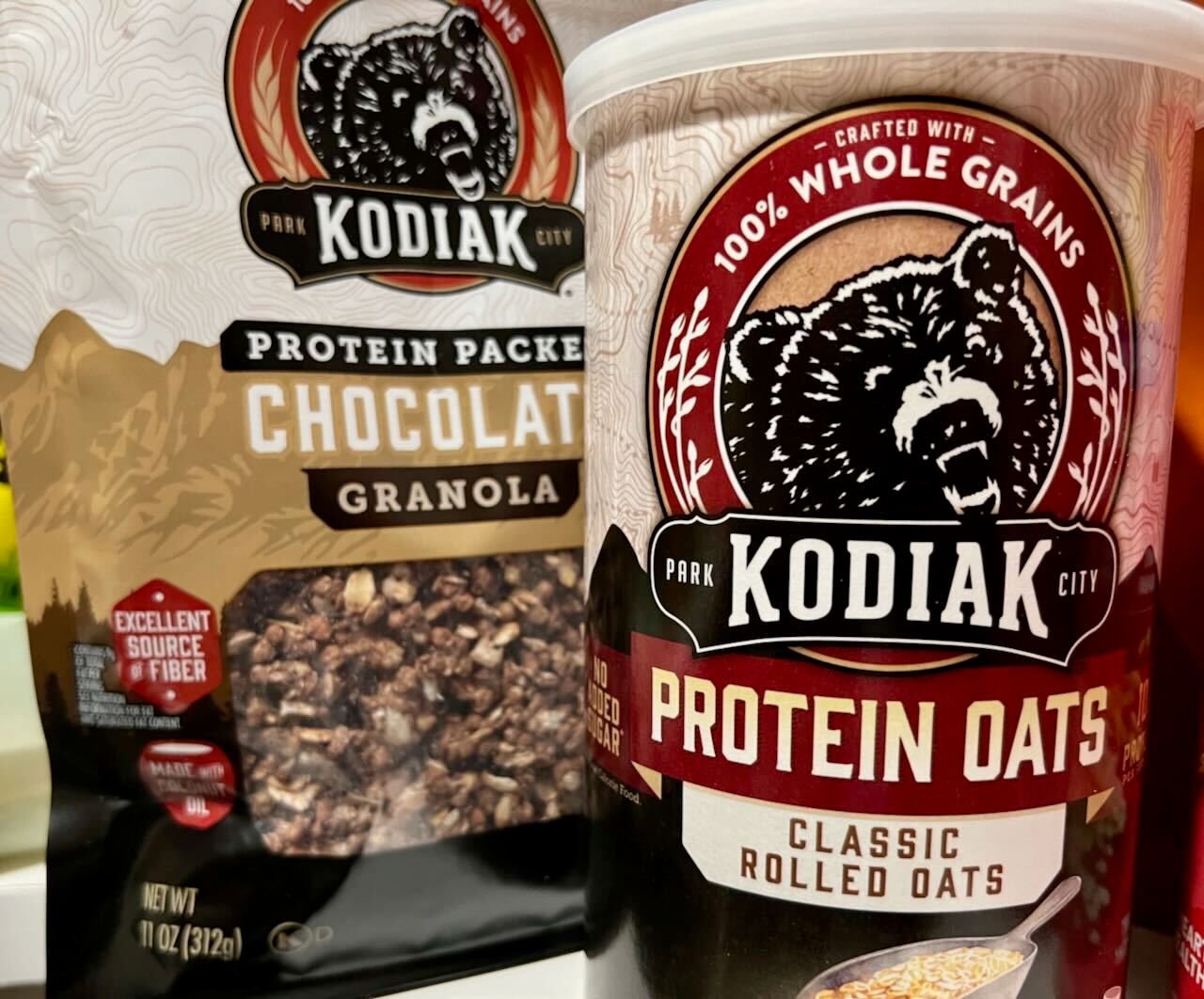
If any of you watched the college and NFL playoff games, you can’t help but have noticed that the pharmaceutical ads were in competition with the ads for Big Food. Or, more accurately, Big Fast Food. It is quite obvious that the new Nutritional Guidelines were not lost on the ad agencies of these concerns. Every other ad was touting the protein content of the various fast foods out there. It was all protein in almost all ads.
Even non-fast food products are all over protein. Pretty soon we’ll have the protein content listed on the front labels of every product out there. It’s already happened with oatmeal. Note: this is not my food. I did not purchase it. But I did set up this shot at my local grocery store.
To Fat or Not to Fat?
That is the question, it seems, at least since the Department of HHS and the USDA have flipped the new food pyramid on its head (a maneuver long past due) and doubled down on a nutrient dense dietary recommendation for kids and adults that—I’m proud to say—is completely in line with the Protein Power diet we’ve been advocating for nearly 4 decades. But, as I and many others have opined already, their pretty new graphic highlighting steak, poultry, fish, eggs, and full-fat cheese, milk, and yogurt as desirable foods while at the same time sticking with the nonsensical 10% of daily calories limit on saturated fats paints a narrative at crossed purpose.
What are doctors, dietitians, and nutritional counselors of any stripe supposed to recommend? The image or the limiting language?
An article in Medscape this week, titled ‘The New Fat Math: What to Tell Patients About Dairy’ demonstrates the conundrum effectively with the two sides squaring off. It leads by introducing a prominent food-as-medicine researcher and cardiologist from Tufts University, named Dariush Mozaffarian, whom they tag as a supporter of full fat dairy for having made such outrageous comments as ‘full fat dairy is equally as beneficial as low fat.’
Well, I’d argue that it is definitely as beneficial, but I’d go one step further to say that it is more so. When you pull the fat out of dairy products to make skim- or low-fat milk, fat free half and half, and low-fat or non-fat cheese or yogurt, you don’t just take away the flavor-carrying molecules (fat) and the richness (fat); you take away the fat-soluble-vitamin-carrying molecules (also fat) as well.
Vitamins A, D, E, and K are soluble in fat, so where do you supposed they wind up in the milk? In the fat. So when you spin out the fat you’re left with a nutrient deficient product that often requires the addition of BS (gums, emulsifiers, flavor enhancers, natural flavorings, etc.) to make it taste and behave more like a ‘real’ dairy product.
And that inferior product—until this new directive from HHS and USDA required switching to full fat dairy—was for years what had been mandated to be fed to 30 million growing kids in school breakfast and lunch programs and to all the other tens of millions of people fed according to the government-sanctioned nutritional guidelines each day.
Hard-line opponents to the full-fat recommendation, such as one Dr. Frank Hu who heads up the Department of Nutrition at the TH Chang School of Public Health right down the way from Tufts in Boston, express concern that if people eat the three recommended daily servings of full-fat dairy they might easily exceed the sacred 10% saturated fat limit, especially if they (horrors!) eat additional servings of animal proteins or eggs. Clutching his pearls, Hu added:
“And then they encourage people to use butter or beef tallow instead of vegetable oils for cooking. And so that’s why the math really doesn’t add up.”
Well, I applaud Dr. Hu’s math skills. He’s completely correct that the math won’t add up. You can’t eat a diet rich in well-marbled steaks, eggs, butter, cream, and brie without exceeding their arbitrary hard ceiling on sat fat. But the problem isn’t the foods—they’re healthful and nutrient dense—it’s chasing the artificial 10% limit.
And it beggars belief to me that there are those still willing to die on that anti-sat-fat hill even after the American College of Cardiology in 2020 exonerated saturated fat (here) reflecting a century of dietary trend data here.

The big rise in fat availability is ‘added fats’ MUFA and PUFA, ie cooking oils, not saturated fat
That data shows sat fat it isn’t the villain in cardiovascular disease, which is the main objection to dietary saturated fat usually cited by most of these dyed-in-the-wood lipophobes. The paper linked to the chart above makes for good reading.
But what’s truly mind-boggling is that among those willing to try to hold that ‘hill’ we find the same ACC, itself, which puts on blinders to its own published exculpatory findings and persists in advising consumption of plant-based foods and limiting saturated fat intake from all sources to 10% of daily calories.
(We wept, He and I.)
Dr. Mozaffarian’s expressed logic is that full fat dairy is a better choice than low-fat junk food. And I agree with that stance totally, but I’d state it without the disclaimer. Full fat dairy is a better choice…full stop. You don’t need to cast it as the lesser of two evils. It isn’t evil. His solution to the conundrum is the same work around that the US Congress settled on for school kids – just don’t count the saturated fat in dairy in that 10% number. OK, that’s a step in the right direction.
But I’ve got a better idea! Why not just get rid of that number? It’s meaningless at best, and beyond that might even be harmful. Humans need fat, including saturated fat.
We were built over millennia to thrive on good quality fats. Read good to mean naturally occurring, as in comes packaged by nature in the milk of mammals and in the meat and eggs of mammals, fish, and birds. And in certain oily fruits and nuts the fat of which can be harvested with nothing but a press (olives, coconuts, avocados, palm kernels, macadamias, etc.). All bets are off in the modern-manufactured, chemically-extracted, bleached and deodorized, so-called ‘vegetable’ oils that Dr. Hu bemoaned the new Nutritional Guidelines’ recommendations would have people replacing with that nasty butter and beef tallow.
We, quite literally, cut our teeth on a high-saturated-fat diet. Human breast milk (most people’s first food) is around 40% to 50% saturated fat. (And it might interest you to know that its fatty acid profile isn’t all that different from lard, about which the Bride opined years ago here — you’ll see how long ago it was by who was California’s governator at the time.)
Granted breast milk is a food designed to promote rapid growth, but the growth stimulators are the sugars found in it, not the fat. The saturated fat is absolutely necessary as a source of structural lipid, building blocks, if you will, for the cell membranes of body and brain. And though present in only minute quantities in breast milk, substantial amounts of two PUFA fats—DHA and arachidonic acid—are incorporated into the baby’s cortex (the gray matter or thinking brain) and retina, and deficiency of these impairs their neurodevelopment.
A child’s neurodevelopment doesn’t end at birth or with the end of breast feeding, so why does it make sense to suddenly shift growing toddlers and young children and adolescents to a saturated-fat-restricted diet by insisting on giving them fat-free yogurt and low-fat milk, as has been done for a couple of decades?
Our brains are the fattiest organ in the body – about 60% of the dry weight of a brain (brain tissue minus water content) is fat, made up of phospholipids, cholesterol, and long‑chain fatty acids such as DHA and arachidonic acid, densely packed within the neurons (brain cells).
Myelin, the insulating sheath around the brain cells’ axons—you can think of them as the output wires carrying signals away from one neuron cell body to another neuron, muscle, or gland—is especially lipid‑rich, made of 40% cholesterol, 40% phospholipids, and 20% glycolipids with a whopping 38% of the fats saturated!. This insulation layer contributes substantially to the brain’s high fat percentage.
Myelin, like the insulation on electrical wires, prevents short circuiting and facilitates smooth transmission; it optimizes the resistance and capacitance properties of the axon’s membrane, enabling efficient long‑distance signaling with minimal energy cost. (And remember, the distance traversed by a single axon can be the length from your brain to your big toe.)
Why the brain needs fat
Lipids form the core of nerve cell membranes where they determine membrane fluidity, receptor function, and the behavior of various ion channels.
DHA, an omega‑3 fatty acid, a major structural component of grey matter making up about 30% of its structural lipid, supports learning and memory. Part of why it is so crucial in utero and early childhood, but required throughout life. If you don’t want your brain to turn to mush, that is.
Cholesterol is required to build new synapses (the connection points between neurons) and to maintain membrane integrity and the microdomains (also called lipid rafts) that are little hot spots of connectivity critical for smooth and efficient nerve signaling. And yet the nutritional ‘authorities’ would limit your intake of it.
Polyunsaturated fatty acids (PUFAs, granted, not sat fats), especially omega‑3 and omega‑6 when kept in balance, modulate membrane receptors, ion channels, and second‑messenger systems involved in mood, cognition, and neuroplasticity. (And by PUFAs, don’t think I mean to include industrially processed seed oils! I do not!)
That’s a big blind spot where the received nutritional wisdom of yore led the public off the cliff – well all the non-Arrow readers anyway. By recommending the use of ‘heart healthy’ so-called ‘vegetable oils’ over all others, the ratio of omega 6 to omega 3 in the diet, which ought be about 1:1 maybe inching up to 3:1, skyrocketed to 15:1 to 20:1. That’s inflaming for the brain (and the body).
Essential fatty acids—i.e., the long chain omega‑3s (EPA and DHA) and omega‑6 (linoleic)—cannot be synthesized de novo by the human body. They must be obtained from the diet (seafood, oily fish, oysters, mussels or supplements in those who won’t eat them) to maintain optimal brain integrity and performance. Diets that are low in long‑chain omega‑3s or that heavily favor pro‑inflammatory fats (i.e., industrial seed oils) can adversely affect cognitive function and mood, whereas adequate omega‑3 intake supports brain health across the lifespan. Is it any wonder that our classrooms are filled with kids who can’t sit still and listen or that nursing home wards are filled with demented seniors?
A recently published 25-year prospective study from Sweden (epidemiological so caveat emptor; it’s just food for generating hypotheses) seemed to turn the accepted narrative that a high fat diet harms the brain on its proverbial ear. The study found that those consuming full-fat dairy and high-fat cheese seemed to suffer less progression from cognitive normality to mild cognitive impairment to outright dementia than those who chose low-fat versions of dairy products.
This finding seemed to confuse the lipophobes, who tried valiantly to explain it away, saying: OK well cheese is fermented, so that makes it different. [Maybe]. And it’s the whole matrix of a food, not just one component of it. And that’s true, too, but while the protective effect was more robust for cheese, it held for full fat dairy that wasn’t cheese. And the same crowd doing this tap dance has never had a problem with teasing out one component (sat fat comes to mind) and blaming a disease or disorder on it.
So, you tell me. Are you team Mozaffarian or team Hu?
Mozaffarian got this one right to my mind. (I’ll admit he doesn’t always get it right, and there are plenty of nutritional points he and I would disagree on.) But in this case, I think you can guess which team we’d back. Team Full Fat!
Put more broadly, we’re on whatever team advocates for eating a nourishing, real food diet, devoid of processed junk. And we’re unashamed to say that means recommending full-fat cheeses and yogurt, whole milk, heavy cream, and half’n’half. In short, the tasty, nourishing upside of the dairy on the new food pyramid! (Minus that pesky 10% limit.)
We’re for an NBS diet rich in quality protein from meat, fish, poultry, and eggs, filled with good fats from those same animal sources (dairy, butter, tallow, lard, schmalz, duck fat) and a few from another kingdom (olives, coconuts, avocados, macadamias), augmented, if desired, with nuts and seeds, fresh greens, colorful vegetables, and low-sugar fruits, limited in concentrated starches and added sugars. Who would argue with that? Well, some would, but they’re just suffering from meat and fat derangement syndrome (MFDS) and refuse to take off their blinkers! Someday maybe they’ll see the light. We’re rooting for that.
The Arrow is a reader-supported publication of my take on nutrition, medicine, books, critical thinking & culture. Both free and paid subscriptions are available for a mere $6 per month — about the price of a vente double pump caramel latte, but a whole lot better for you. If you would like to support my work, the best way is by taking out a paid subscription. I assure you it will be most appreciated.
The Last Round Up
One of my favorite columns to read each day is that of Jeff Childers, who writes on legal and political issues with a sarcastic, sardonic sense of humor that I enjoy.
Note: he is an unrepentant anti-Democrat, which is why I don’t quote him often, because I’d prefer to keep raw politics out of the Arrow. But there was a bit in today’s Coffee & Covid (the name of his substack) that I thought worthy of passing along. If you skew to the left, ignore the jibes blaming that side of the aisle for the problem (there are plenty to be found) and just skip on down to the meat of the matter. Says Childers:
For decades, food safety was a Democratic talking point. Now deep-red Florida is actually doing something about it— and what they found could spoil your breakfast. Yesterday, Lake Worth CBS affiliate 12-News reported, “Florida testing finds high levels of Roundup weed killer in several popular bread brands.” In case you missed the advisory, you’re not even supposed to touch Roundup. No swallowing. Florida Governor Ron DeSantis, First Lady Casey DeSantis, and Florida Surgeon General Dr. Joseph Ladapo appeared together yesterday at Palm Beach State College, unveiling the latest findings from Florida’s new food-testing initiative. They found that several widely sold bread brands contain high levels of glyphosate, the active ingredient in the popular weed-killer and lawsuit defendant Roundup. It’s great news! Your morning toast is practically bursting with Roundup, the same product you use to kill weeds in your driveway. I’m sure it will be fine. After all, the FDA has long called these levels “within tolerance,” which is regulatory diction for “we haven’t done a real study since 1982 when the country’s most pressing health concern was whether Orange Julius used real oranges.” According to Florida’s investigators, Nature’s Own Butterbread —I am not making this up— contains a weed killer in the bread you’re feeding your children for lunch. Nature’s Own— because nothing says ‘natural’ like a patented herbicide developed in a Monsanto lab. Maybe they should rename it “Monsanto’s Own.” Or how about, “Chemical Valley Bread: Now With That Fresh Herbicide Taste.” For decades, anyone who questioned what Big Ag was putting in our food was labeled a tinfoil hat-wearing “conspiracy theorist.” And —this is the real mind-bender— food safety was exclusively the province of Democrats, who constantly complained but never seemed to accomplish anything. Now, deep-red Florida’s doing the testing the federal government should have been doing all along, and —surprise!— your super-healthy whole wheat bread is marinated in neurotoxic carcinogens. The same agencies that assured us the covid vaccine was “safe and effective” have also been assuring us that eating Roundup with peanut butter and jelly is totally fine. Only some brands tested positive for the weedkiller, including Nature’s Own Butter Bread (mentioned above), Nature’s Own Perfectly Crafted White, and Sara Lee Honey Wheat. Wonder Bread Classic White tested positive, which finally explains the ‘wonder’—as in, ‘I wonder what’s killing me?’ Other breads, like Sara Lee Artesano White and Pepperidge Farm Farmhouse White, had no detectable glyphosate. Dave’s Killer Bread tested positive but lower than other brands. Florida is outing bad foods on its new food safety website, exposingfoodtoxins.com. It’s using the name-it-and-shame-it method, since nearly all these chemicals are within “safety limits” as defined by the FDA. Folks can check the website and figure out what not to buy. The RoundupGate announcement followed two previous blockbusters this month. One found arsenic in many popular children’s candies, because pre-loading the poison makes it more convenient for Halloween serial killers. (The National Confectioners Association claimed the arsenic was naturally occurring, which doesn’t help explain why only some brands have it.) Another Florida investigation found arsenic, cadmium, lead, mercury, and pesticides in various brands of baby formula. Some had both lead and mercury! “There are obviously a lot of issues with whatever is sold in a supermarket,” Governor DeSantis explained. “You have some that are very fresh and natural. Others may not be as much.” What he carefully didn’t say —avoiding lawsuits but clearly implying— is that the FDA could have and should have required food labeling for levels of glyphosate, lead, cadmium, mercury, pesticides, and so on. I’ll let you speculate on why those aren’t mandatory label disclosures. DeSantis was saying, fine, if FDA won’t, we’ll disclose the levels of food poisons. Well, with arsenic in the candy, lead in the formula, and Roundup in the bread— at least they’re being thorough. Florida —the reddest of red states— is finally doing something easy and practical that the Democrats could have done at any time, but never did. Just test the products and inform consumers. It’s so simple. No regulatory overhead, no politics, no NGOs— just give people the information and let us decide for ourselves, which, admittedly, progressives consider even more dangerous than feeding us mercury and weed-killer. Meanwhile, Democrats have finally crept out of Big Ag’s pocket into the open, and are actually defending unlabeled contaminants in foods. Conservatives are now the clean-food party. Liberals are defending weed-killer in bread. If you’d told me that in 2019, I’d have asked what herbicide you were smoking. How the party of Big Macs became the party of food safety, while the party of organic kale started defending arsenic, is a flip historians will be unpacking for generations. |
Odds and Ends
Road trip! An interactive map of 250 Places to go to celebrate America in its 250th year. Some unusual ones here, conveniently listed by region and by category.
Why does winter air smell so fresh? The Bride and I commented on this phenomenon just last night when we walked to dinner.
Unraveling the mysteries of our solar system's oldest and largest planet: Jupiter. Watch the video.
I used to be a devoted SCUBA diver in my youth; I even became an LA County Diver and a dive instructor. At one point I aspired to own a dive boat. And in all my years under the sea, I never saw anything like this giant. Not sure what I'd have done if I had.
How to speak Texan. Or so the title of this article says. For my part, most of these so-called Texas turns of phrase are broadly Southern, not purely Texan. I can attest you'll hear most all of them commonly in Arkansas and Missouri and elsewhere.
If you're obsessed with the Winter Olympics (as our eldest grandson is) you'll enjoy this tour through these Best Winter Olympic Outfits of all Time. Not sure I agree with them all, but different strokes as the saying goes.

Video of the Week
One of mine and MD’s favorite operas is Mozart’s The Magic Flute. We’ve seen it multiple times in multiple locations. And MD’s absolute favorite aria is the Queen of Night aria, usually sung by a fabulous soprano (you have to be pretty fabulous to sing it, after all, though MD likes to sing it in a slightly lower key in the shower). This video blew my mind. It’s a man who can whistle it like a bird! Absolutely incredible. Enjoy!
Time for the poll, so you can grade my performance this week.
How did I do on this week's Arrow? |
That’s about it for this week. Keep in good cheer, and I’ll be back soon.
Please help me out by clicking the Like button, assuming, of course, that you like it.
This newsletter is for informational and educational purposes only. It is not, nor is it intended to be, a substitute for professional medical advice, diagnosis, or treatment and should never be relied upon for specific medical advice.
Thanks for reading all the way to the end. Really, thanks. If you got something out of it, please consider becoming a paid subscriber if you aren’t yet. I would really appreciate it.
Finally, don’t forget to take a look at what our kind sponsors have to offer. Dry Farm Wines, HLTH Code, Precision Health Reports, and Jaquish Biomedical.
And don’t forget my newest affiliate sponsor Lumen. Highly recommended to determine whether you’re burning fat or burning carbs.
Reply